

Gemstone
Amazonite
Origin: Brazil
Care instructions
Clean with a soft damp cloth and dry immediately. Avoid acidic cleaners, abrasive materials, harsh chemicals and prolonged contact with liquids. Natural variation, inclusions, and tonal change are part of the material character.
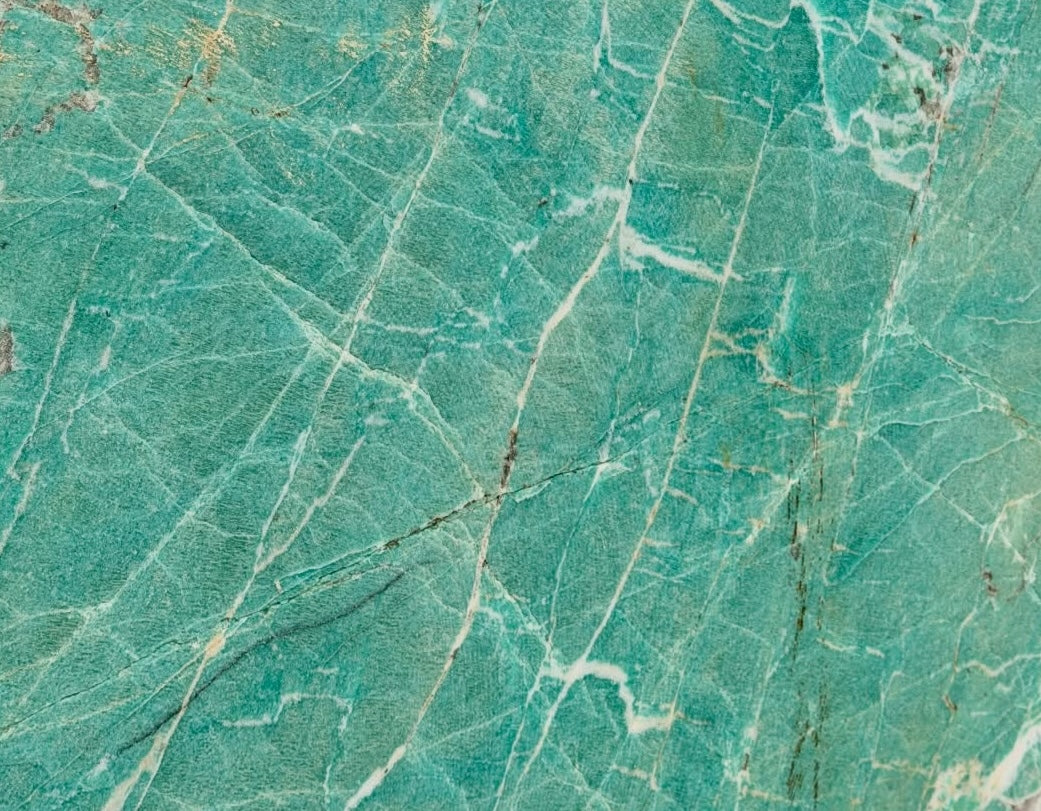
Amazonite is a rare variety of the mineral microcline, distinguished by its characteristic blue-green hues ranging from soft seafoam to intense turquoise. The stone received its name in the 18th century in reference to green stones associated with the Amazon region.
Amazonite forms deep within the Earth’s crust as magma cools slowly and minerals crystallize over exceptionally long periods of time. Its formation dates back roughly 500 million years. Its characteristic blue-green color is attributed to natural processes and trace elements within the crystal structure. As a result of its geological formation, each piece has an individual character, with its own variations in color, patterns and natural inclusions.
Amazonite occurs in Brazil, particularly in the regions of Minas Gerais and Goiás. Brazilian Amazonite is appreciated for its intense blue-green hues and characteristic natural patterns. Other deposits are found in Madagascar, Russia, the United States and Mozambique. Depending on its origin, the stone varies in color, structure and overall appearance.
Amazonite has been used for jewelry and decorative objects for thousands of years. In ancient Egypt, the blue-green stone was fashioned into jewelry, amulets and ceremonial objects. Amazonite has also been associated with the tomb of Pharaoh Tutankhamun, where objects described as containing Amazonite included jewelry elements and beads. Carved into symbols and worn as an amulet, the stone held particular significance in antiquity and continues to be appreciated today for its distinctive color and natural appearance.
Amazonite forms deep within the Earth’s crust as magma cools slowly and minerals crystallize over exceptionally long periods of time. Its formation dates back roughly 500 million years. Its characteristic blue-green color is attributed to natural processes and trace elements within the crystal structure. As a result of its geological formation, each piece has an individual character, with its own variations in color, patterns and natural inclusions.
Amazonite occurs in Brazil, particularly in the regions of Minas Gerais and Goiás. Brazilian Amazonite is appreciated for its intense blue-green hues and characteristic natural patterns. Other deposits are found in Madagascar, Russia, the United States and Mozambique. Depending on its origin, the stone varies in color, structure and overall appearance.
Amazonite has been used for jewelry and decorative objects for thousands of years. In ancient Egypt, the blue-green stone was fashioned into jewelry, amulets and ceremonial objects. Amazonite has also been associated with the tomb of Pharaoh Tutankhamun, where objects described as containing Amazonite included jewelry elements and beads. Carved into symbols and worn as an amulet, the stone held particular significance in antiquity and continues to be appreciated today for its distinctive color and natural appearance.