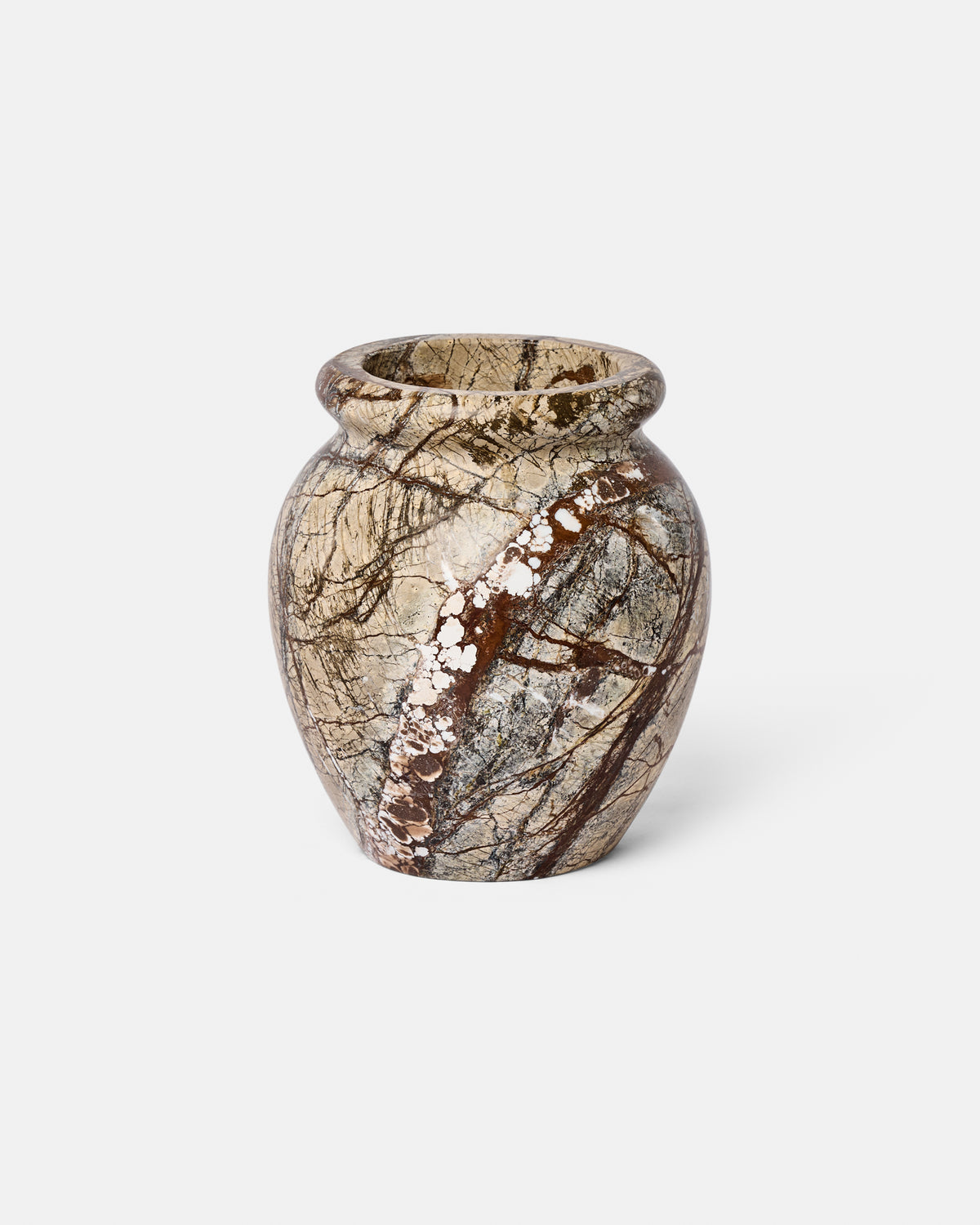
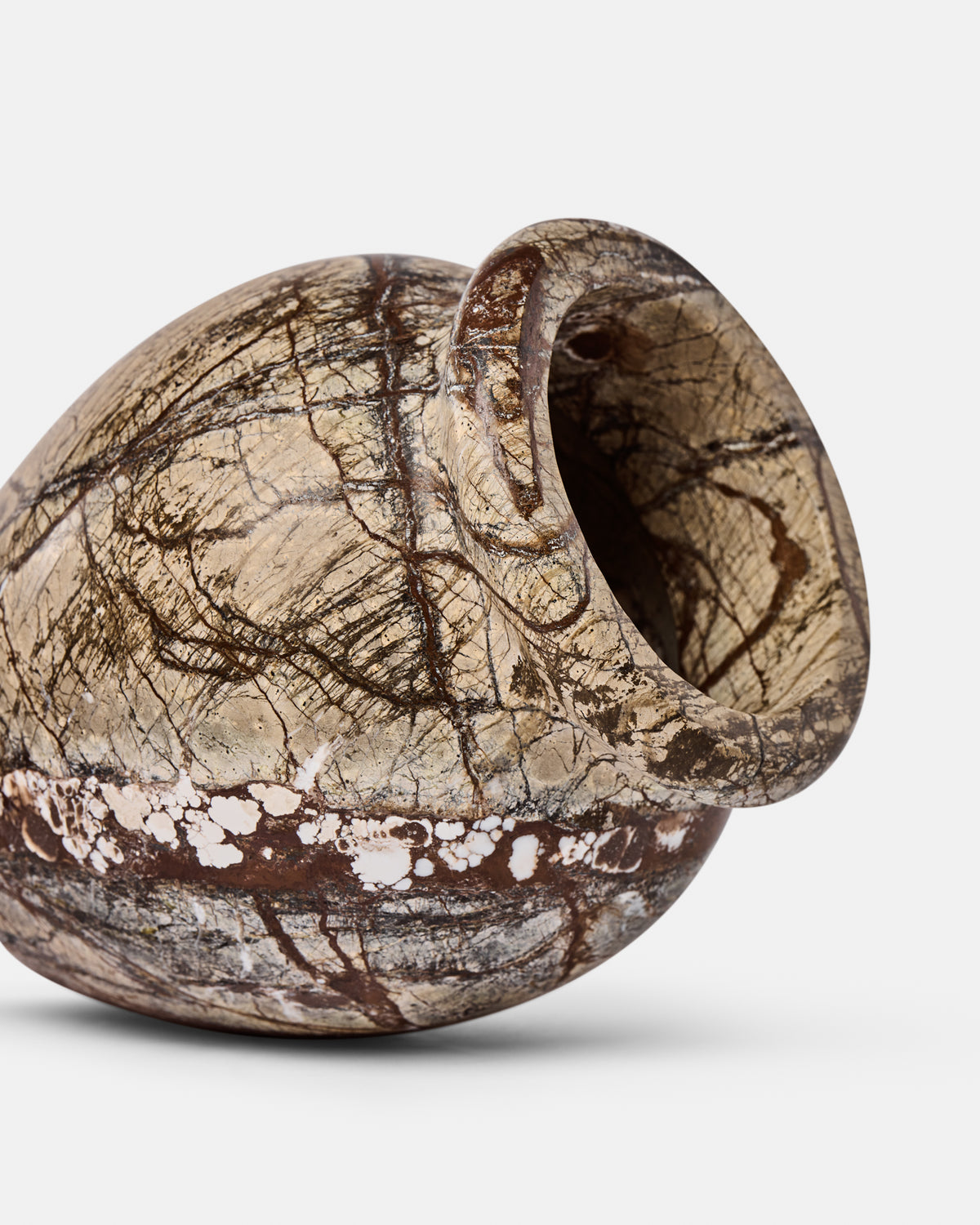
Clean with a soft, slightly damp cloth and dry thoroughly. If needed, use a mild, pH-neutral cleaner suitable for natural stone. Avoid acidic liquids, abrasive cleaners or materials, harsh chemicals and prolonged contact with moisture, as these may affect the polished surface. Natural variations, inclusions and tonal differences are characteristic features of the material.
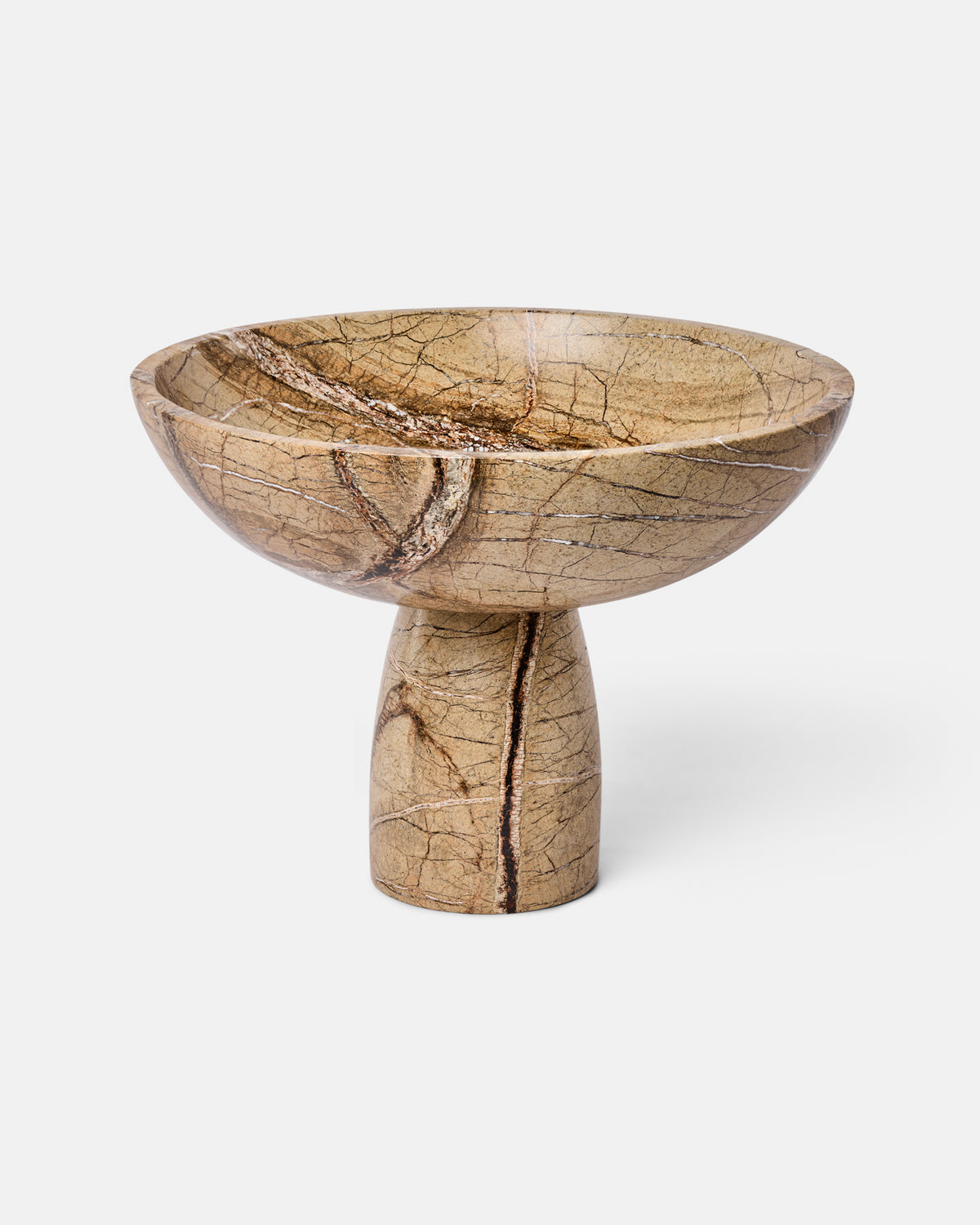
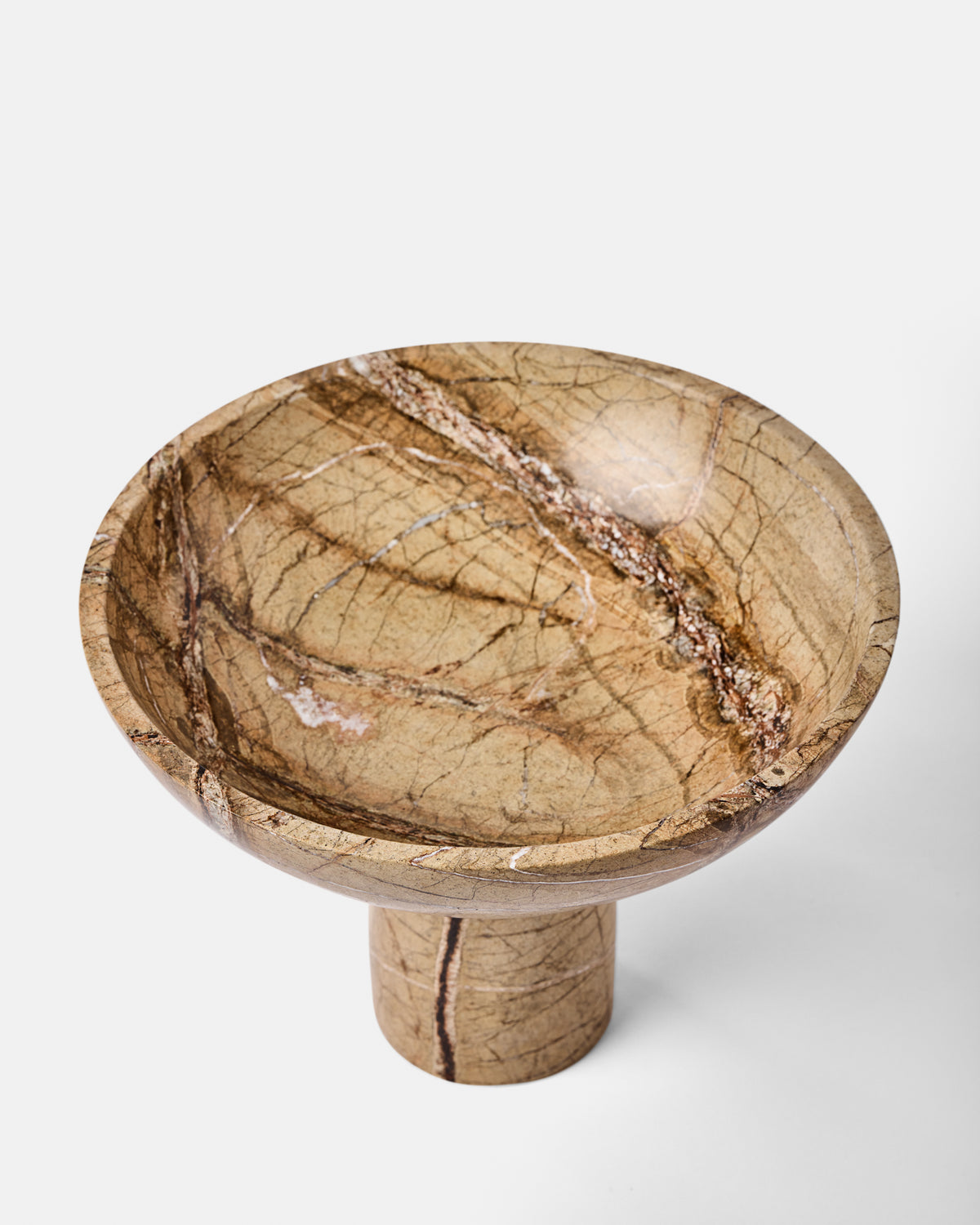
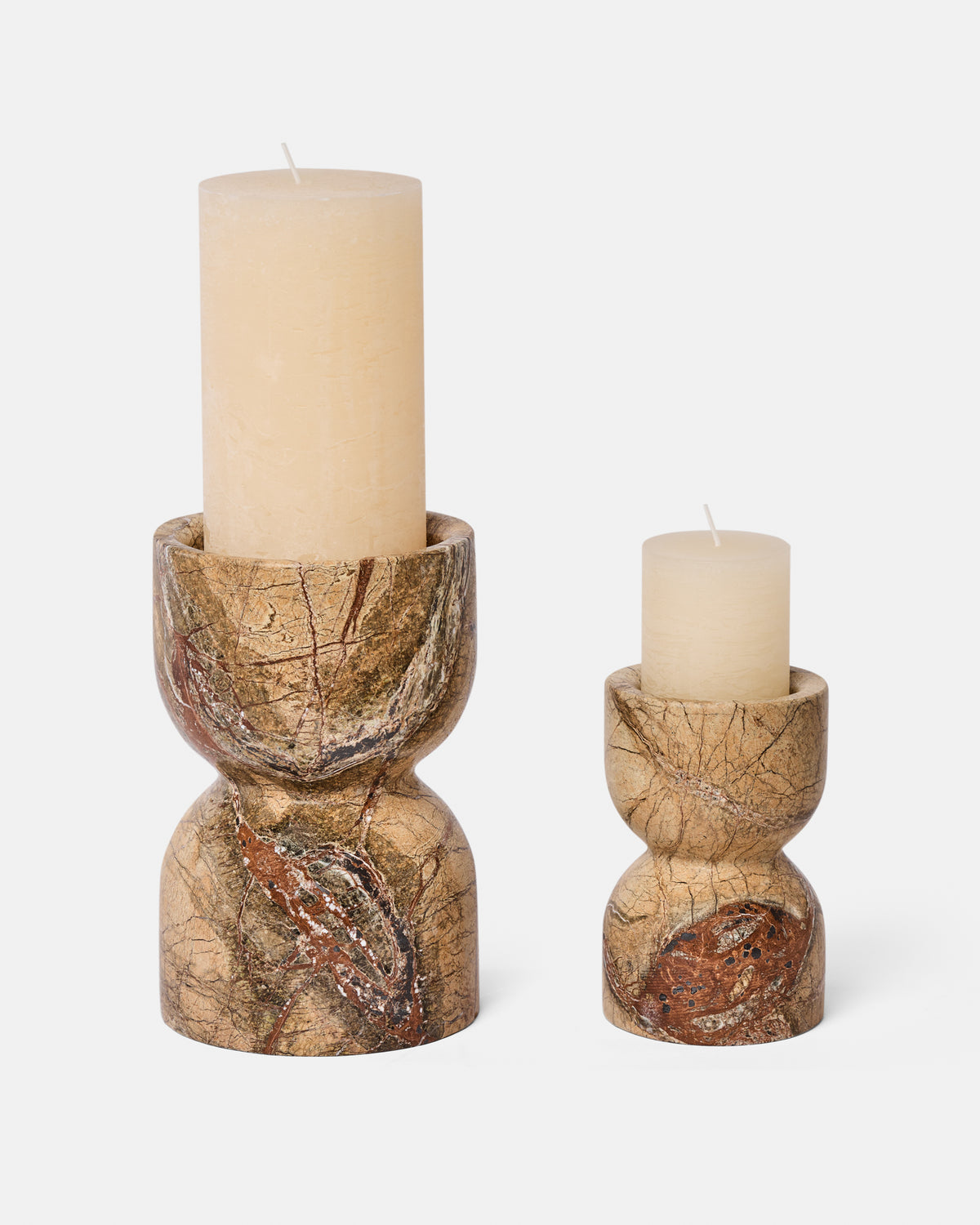
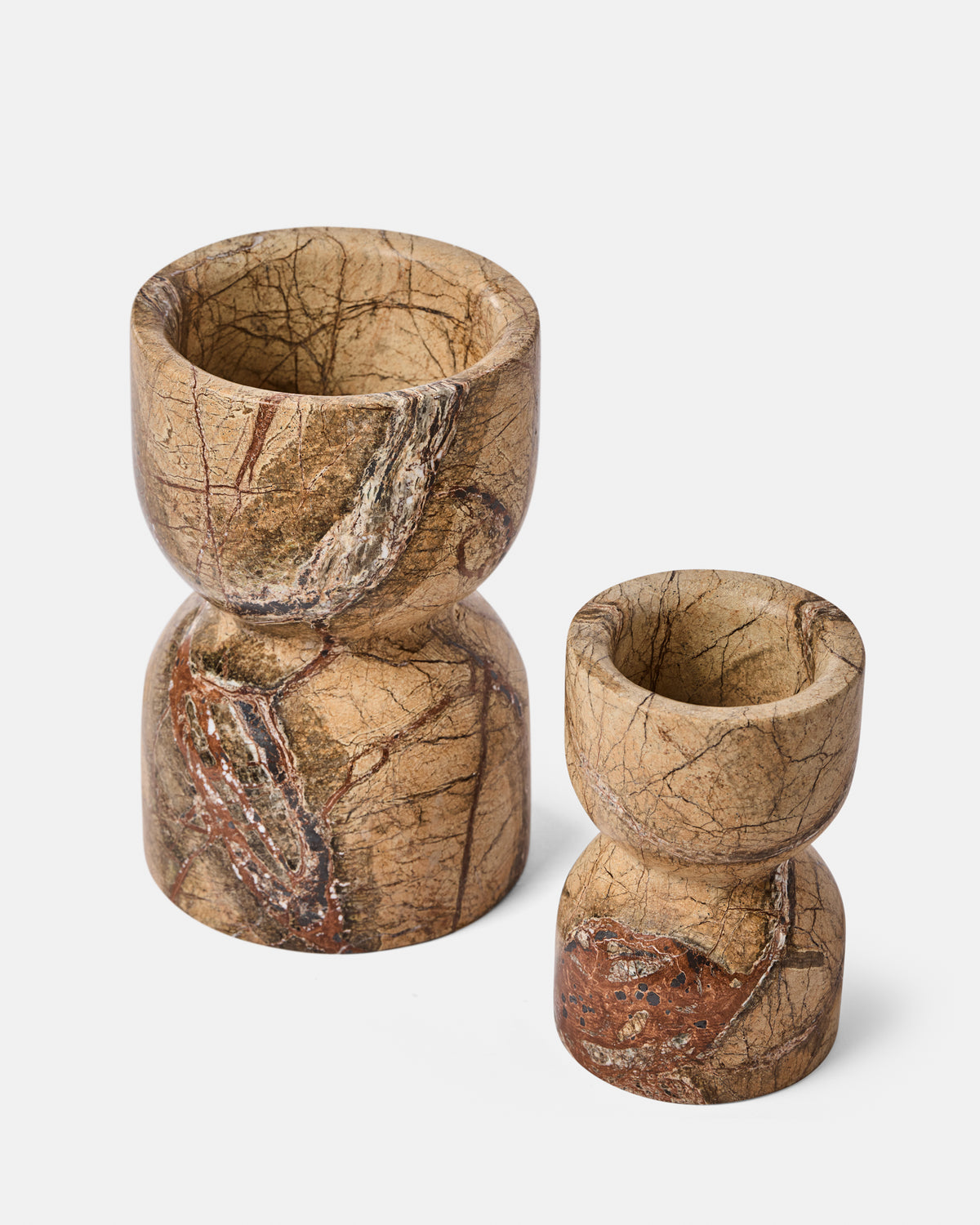
Brown Forest comes from the Bidasar region of Rajasthan in northern India. Known commercially as Brown Forest Marble, the stone is geologically a serpentinite, formed through the transformation of ancient ultramafic rock. Its warm brown, taupe and cream tones are crossed by an intricate network of darker and lighter veins, creating patterns reminiscent of branching roots, forest landscapes and autumn leaves. No two sections follow the same composition, giving every piece a distinctly individual appearance.
Brown Forest developed over immense geological periods as ancient ultramafic rock was transformed into serpentinite. During this process, mineral alteration, natural fracturing and the movement of mineral-rich fluids through the rock created the branching veins, layered structures and contrasting tones visible today.
Unlike stones defined by a uniform color or regular veining, Brown Forest is characterized by movement and irregularity. Fine lines intersect with broader mineral formations, while shifts between earthy browns, cream and darker tones create an almost landscape-like composition. Its distinctive appearance has made Brown Forest a sought-after decorative stone for interiors, architectural elements and sculptural objects, with each cut revealing a different part of its natural structure.