Grand Antique
Origin: France
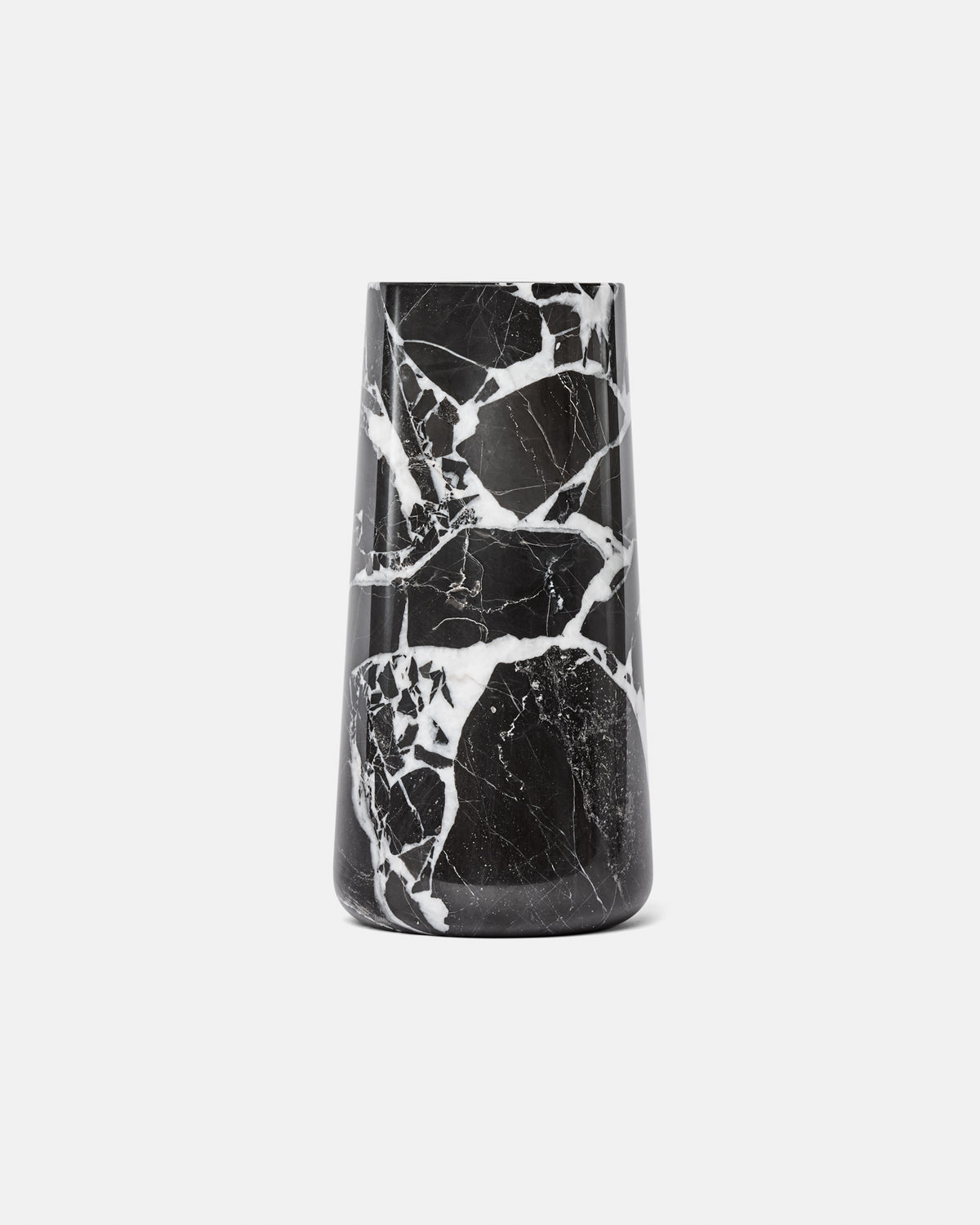
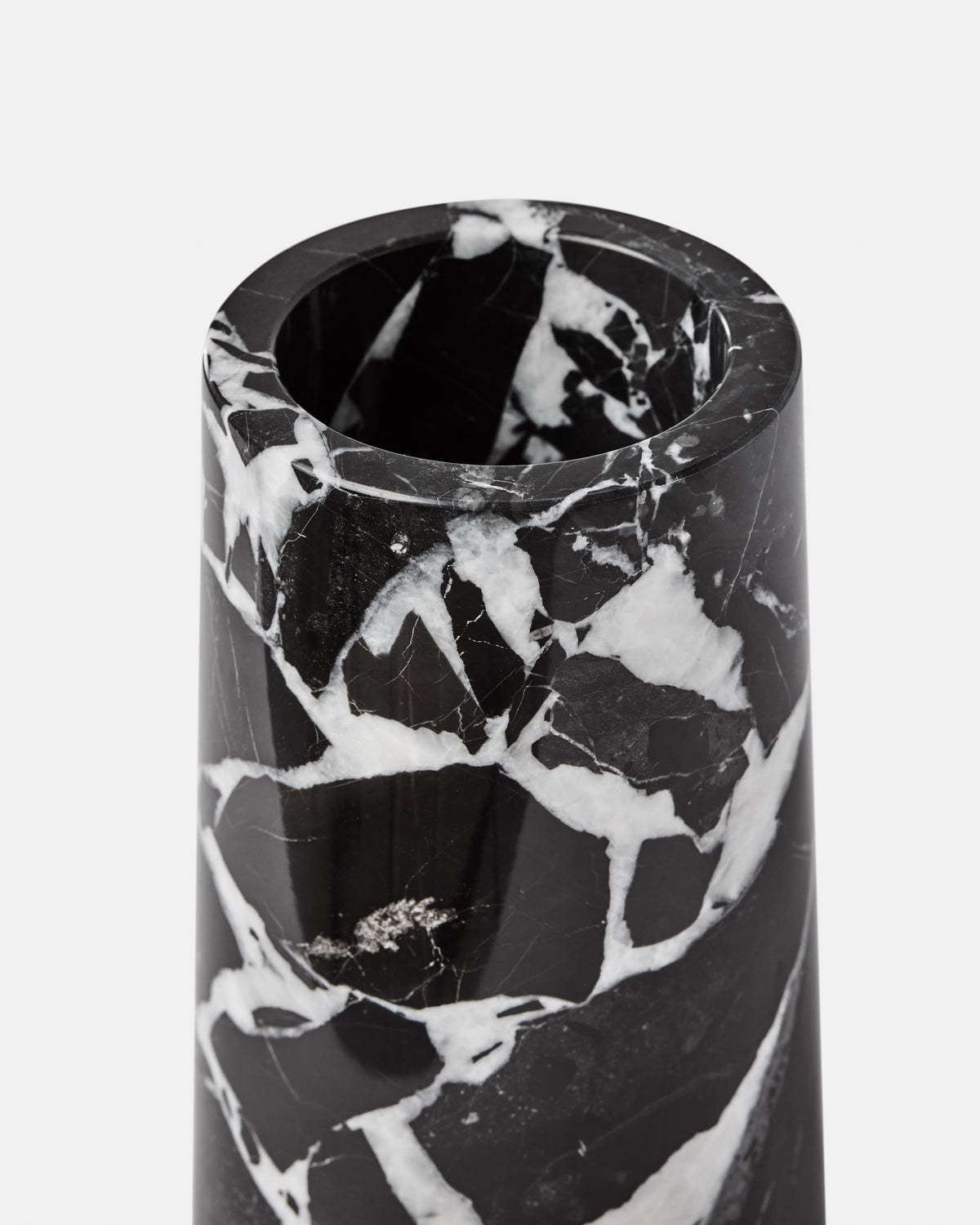
Grand Antique comes exclusively from the historic quarry of Aubert in the French Pyrenees. Its appearance is unmistakable: angular fragments of deep black limestone are set against brilliant white calcite, creating a dramatic, almost mosaic-like composition. Rather than the flowing veins commonly associated with marble, Grand Antique is defined by fracture and contrast, with every cut revealing a different arrangement of its natural black and white structure.
Its distinctive appearance was formed around 65 million years ago during the geological processes that shaped the Pyrenees. Powerful tectonic forces fractured existing black limestone into irregular fragments. White calcite later filled the spaces between them, binding the broken pieces together into a single solid stone. This natural process created the bold, fragmented structure that characterizes Grand Antique today.
Grand Antique has been quarried and appreciated since Roman times, when the stone was transported from the French Pyrenees and used for columns, architectural elements and decorative interiors. Over the centuries, its striking black and white composition continued to appear in European architecture and design. After periods in which the historic quarry was no longer active, extraction was eventually revived, making this distinctive stone available once again.
With its singular origin, dramatic natural structure and history spanning more than two thousand years, Grand Antique remains one of the most recognizable black and white decorative stones. Its irregular composition ensures that every piece reveals a unique fragment of the stone’s geological history.
Explore Grand Antique