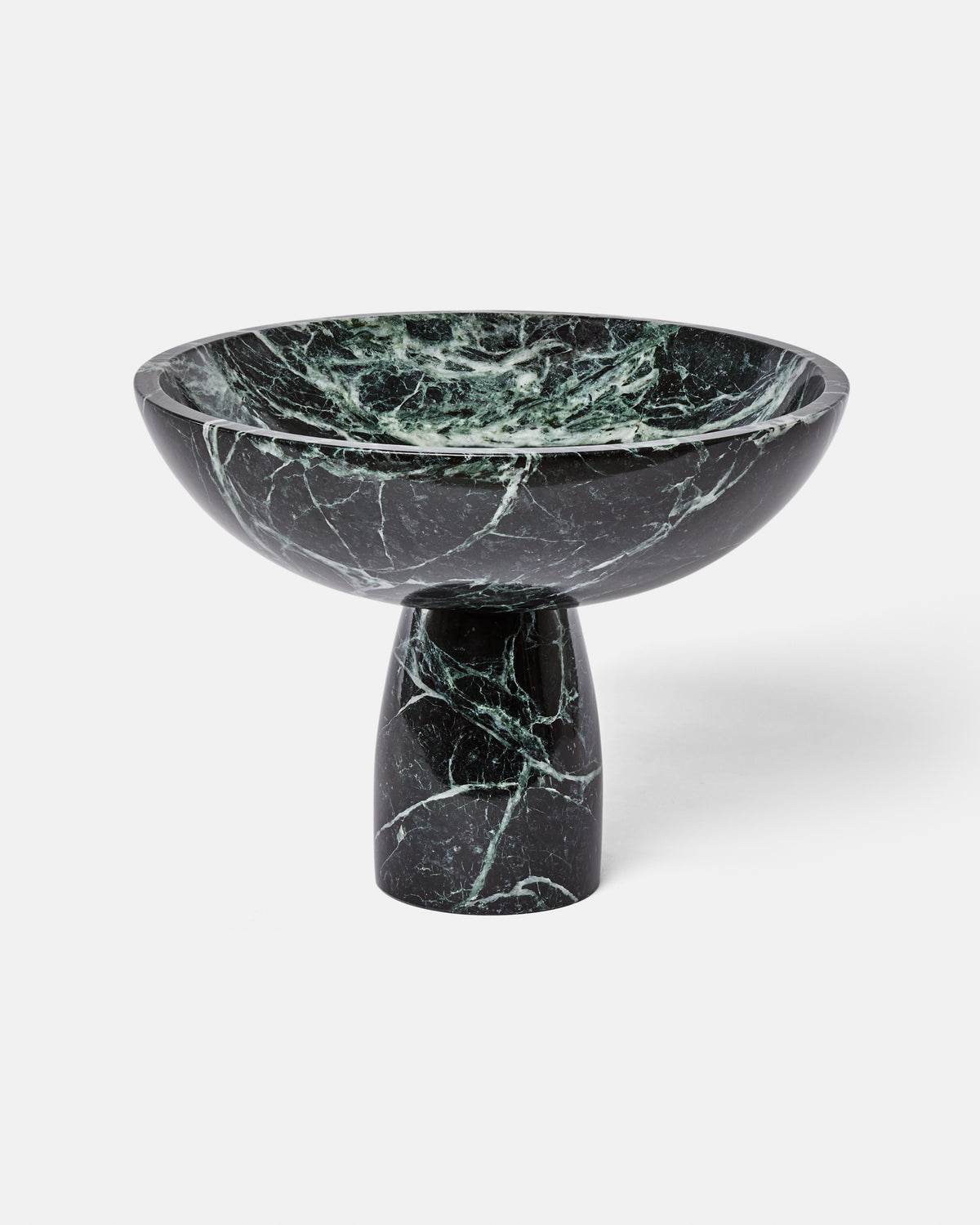
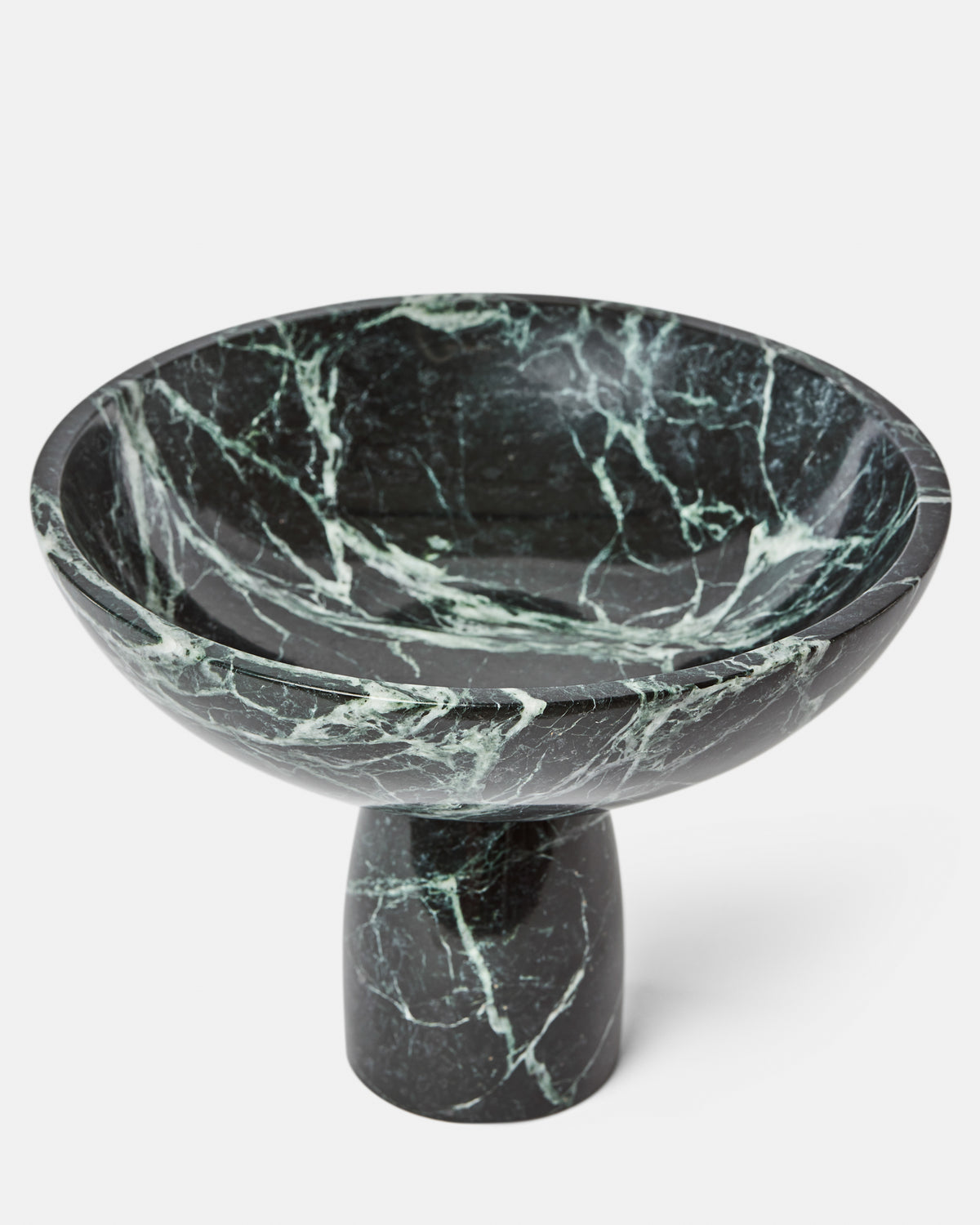
Verde Alpi comes from the Aosta Valley in the Italian Western Alps, where it is extracted from mountain deposits at elevations exceeding 1,000 meters. Although traditionally sold as marble, Verde Alpi is geologically a serpentinite. Its deep bottle-green ground is interrupted by white to pale grey calcite veins, fractures and mineral formations, creating a structure that can shift from relatively quiet areas to strongly brecciated sections within the same stone.
Its geological origins lie in rocks that once formed part of an ancient ocean floor. As tectonic plates converged and the Alps began to form, fragments of this oceanic material were pushed upward and transformed under immense pressure into serpentinite. The movement of the mountains fractured and folded the rock, while calcite-rich fluids later crystallized within the openings. The pale structures visible across Verde Alpi today are the result of these successive geological events.
Verde Alpi appears across architecture, interiors, furniture and sculptural design. Its visual character changes considerably depending on how the stone is cut: one section may be dominated by uninterrupted dark green, while another exposes broad calcite fractures and fragmented structures. This variation is not simply decorative; it reveals the physical forces that transformed ancient oceanic rock into stone now extracted high in the Italian Alps.
Explore Verde Alpi